How to Increase Facebook Followers in 2026
Oct 20, 2026 · 11 min read
Your Page could add followers every week and still reach almost nobody. Recent benchmark reporting estimates average Facebook Page organic reach at roughly 1.37% to 1.65% of followers per post, based on recent Facebook marketing statistics summarized by Shno. That single range changes the question. To increase Facebook followers in a way that matters, you don't need a longer list of tactics. You need followers who get reached, respond, return, and share, plus a testing system that proves which content creates them.
What Facebook Growth Looks Like in 2026
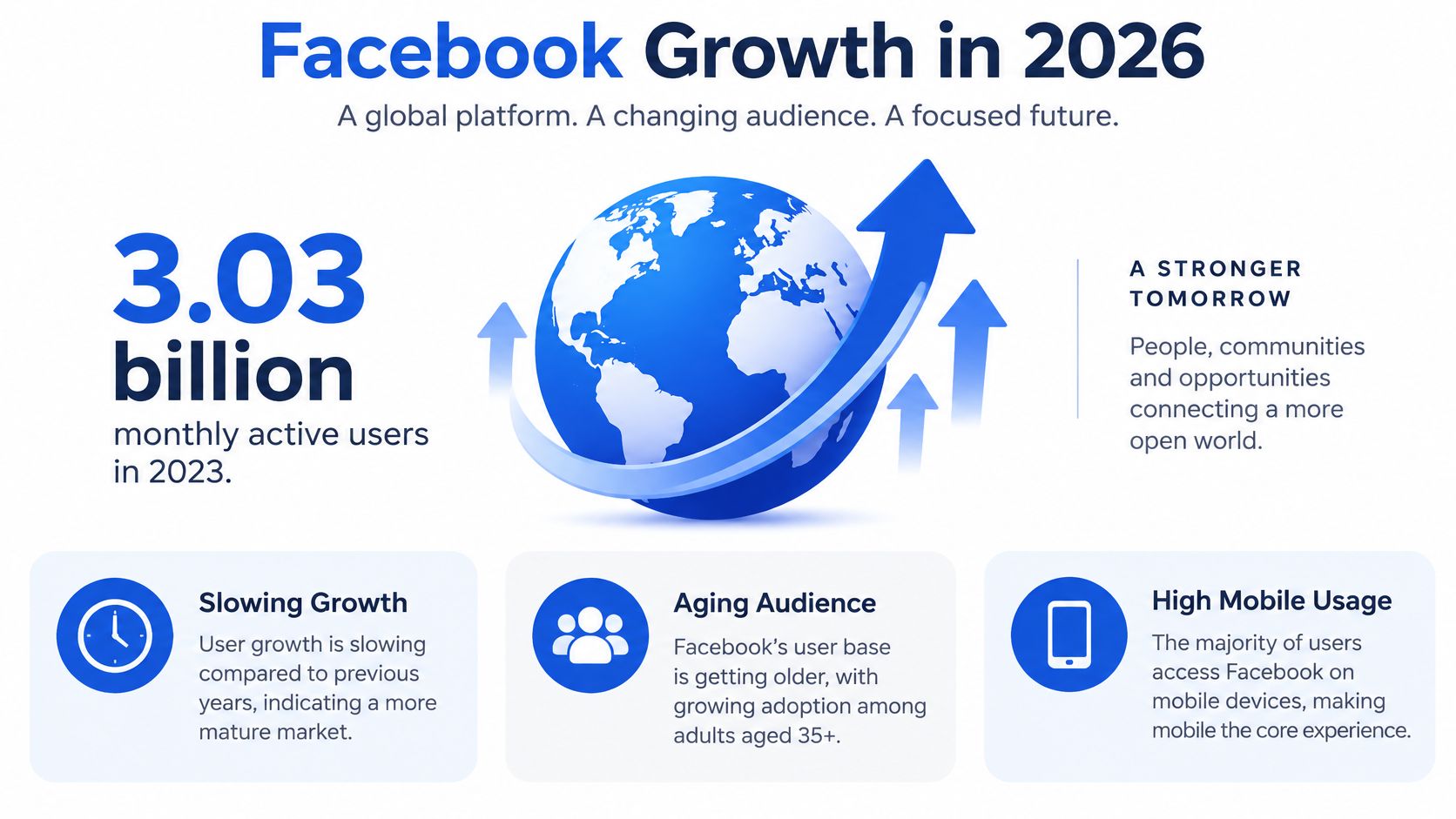
Facebook is not short of people. It's short of untapped attention. The platform passed more than 1 billion monthly active users in 2012, reached approximately 2.5 billion in 2019, then moved to about 2.8 billion in 2020, a 12% year-over-year increase, before growth moderated to 2.91 billion in 2021, 2.96 billion in 2022, and 3.03 billion in 2023, according to Countly's global Facebook user history. That trajectory tells you the strategic reality. You're no longer growing alongside a rapidly expanding platform. You're competing for attention inside a mature one.
Saturation changes the job
In a high growth era, a Page could gain followers partly because new users kept arriving and exploring. In a saturated era, follower growth is a conversion problem. You have to convert existing feed attention, recommendations, search visits, shares, and profile visits into follows. Consistent publishing, relevant topics, and measurable engagement do that work. Waiting for platform growth won't.
Geography sharpens the point. The largest audiences are concentrated in major markets such as the United States, India, Indonesia, and Brazil. A generic English post written for nobody in particular competes poorly against content built for a specific market, language, and cultural context. If your buyers are local, your references, posting windows, offers, and examples should be local too.
A Page doesn't grow because Facebook is large. It grows because a specific group repeatedly finds a specific promise worth following.
That's why vague positioning fails first. A visitor should understand, within seconds, who the Page helps, what it publishes, and why following beats watching a single post. Without that clarity, even strong reach leaks away as profile visits that never convert.
Why More Followers Rarely Means More Reach
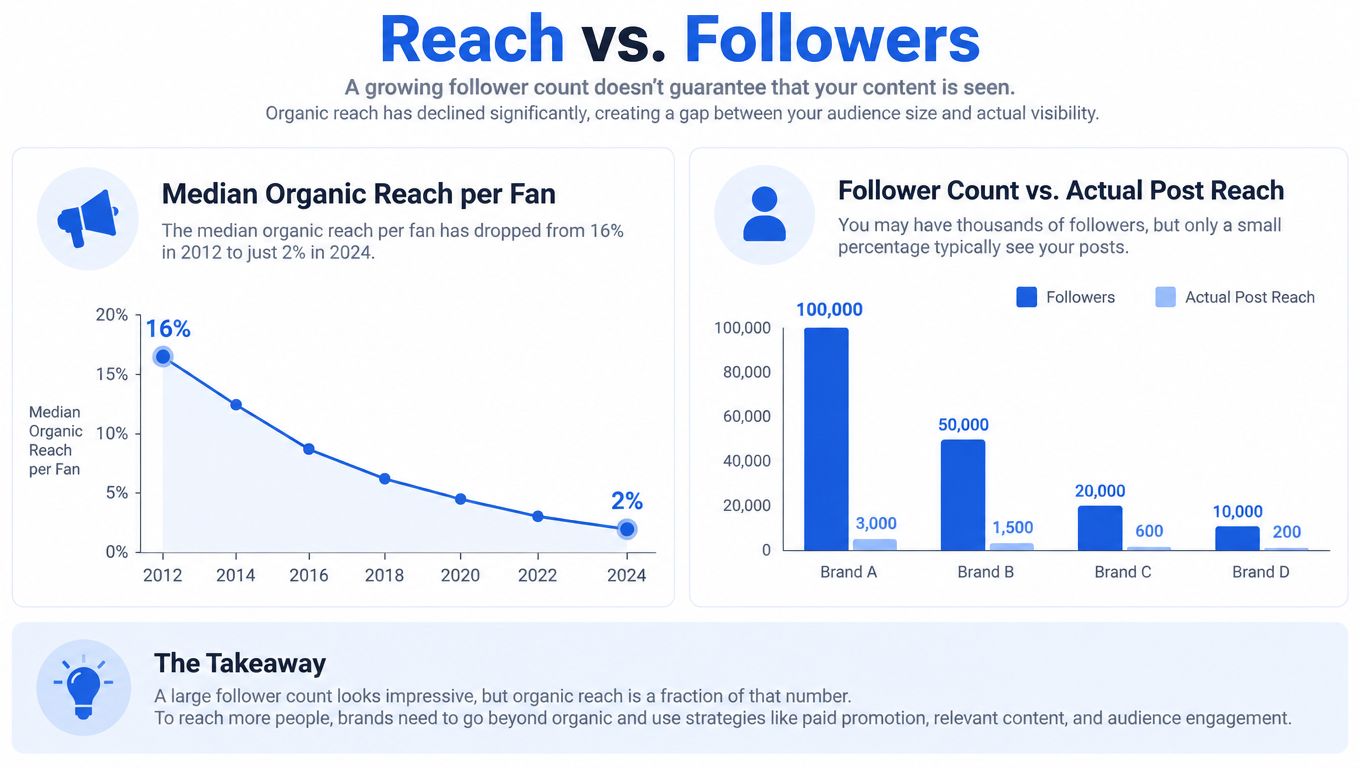
The most expensive assumption in Facebook marketing is that follower count controls distribution. It doesn't. An analysis of 50,000 posts from 1,000 Facebook Pages found median organic reach per fan fell from 16% in February 2012 to 12.60% in September 2013, 10.15% in November 2013, 7.83% in December 2013, and 6.51% in March 2014, as reported in TechCrunch's analysis of the filtered feed problem. That decline happened more than a decade ago. Treating followers as guaranteed impressions has been wrong ever since.
The filtered feed breaks the math
A separate Social@Ogilvy analysis in that same reporting found average organic reach fell from 12.05% in October 2013 to 6.15% in February 2014, a 49% decrease, while Pages with more than 500,000 fans were reported at roughly 2.11%. Larger did not mean proportionally more visible. In some cases, larger meant a smaller share of the audience saw each post.
Follower quality becomes a distribution issue, not a branding preference. Followers who don't care about your niche won't comment, share, watch, or return. Weak early signals give Facebook little reason to distribute the next post widely. You haven't built an audience. You've built a denominator that makes performance look worse.
- Follower acquisition: Someone taps follow after a post, ad, invitation, or recommendation.
- Active follower activation: That person later gets reached, watches, comments, shares, visits again, or converts.
- Vanity accumulation: The total rises while reached followers, meaningful comments, and shares stay flat.
Measure activation by cohort when you can. Compare followers gained during a campaign with later reach, shares, video completion, return visits, and conversions. A smaller Page with relevant followers can outperform a larger Page filled with inactive or poorly matched accounts because its content earns stronger signals and travels further through shares.
Building the Foundation Before You Scale
Promotion sends people to a Page. The Page decides whether they follow. Treat your profile as conversion infrastructure, not decoration. Complete the About information, category, contact details, website, profile image, cover image, and action button. Pin one post that explains your promise and shows proof. If a visitor can't tell what they'll get every week, they won't commit on the strength of one good Reel.
Define pillars before chasing volume
Pick a narrow set of recurring topics tied to one audience problem. A fitness coach might rotate short form corrections, client questions, and simple home workouts. A local bakery might use production videos, weekly specials, and customer stories. The pillars differ. The principle doesn't. Each pillar should give a non follower a reason to expect future value, not just enjoy a single post.
Meta's own guidance points in the same direction. As summarized in Meta's guidance on publishing and audience activity, Pages should publish when the audience is most active, use visual formats, respond to comments, and review frequency rather than assuming higher volume is better. Start by auditing Facebook Insights for active windows, then set a cadence you can sustain. Two or three strong weekly posts you can maintain and measure beat a frantic burst followed by silence.
- Audit the profile: Remove outdated links, unclear descriptions, and covers that don't state the niche.
- Set the baseline: Record followers, reach, reactions, comments, shares, profile visits, and follows.
- Queue the rhythm: Plan recurring slots with a dedicated Facebook scheduling workflow so publishing doesn't depend on daily motivation.
- Assign engagement time: Reply to comments after each post, ask follow up questions, and note repeated objections or topics.
Practical rule: Don't scale a Page that can't explain itself. Fix the promise, proof, and next action first.
Content and Cadence That Earn Discovery
Consider a solo home renovation creator who also posts on Instagram and YouTube. She doesn't need more random Facebook posts. She needs Facebook native tests. On Monday she publishes a short vertical video showing one costly tiling mistake. On Wednesday she posts the same lesson as a photo sequence with a question. On Friday she shares a longer explanation and invites followers to submit photos for a recurring review series. Each version asks viewers to follow for the next installment.
That structure matters because Facebook increasingly separates connected content from recommended content, meaning non followers can discover posts, Reels, and Groups while existing followers aren't guaranteed to see every Page post. Industry reporting also found standard post reach fell 41% year over year in one large 2025 dataset, while Reels reach increased, a pattern covered in Virlo's overview of Facebook's recommendation driven distribution. The correct response isn't video only. It's format testing by audience source.
Test for discovery, then convert it
Track non follower reach separately from follower reach. A Reel that reaches strangers but produces no profile visits is entertainment, not growth. A photo post with lower reach but stronger shares and follows may be the better acquisition asset. Strengthen the opening line, visual contrast, and first seconds of video. Detailed thinking in FindClout's organic reach guide is useful context here, especially paired with sharper opening patterns from these scroll stopping hook techniques.
The short walkthrough below shows the kind of practical production and publishing discipline that supports this testing rhythm.
Build one recurring series with a recognizable title, format, and follow prompt. Discovery brings a viewer once. A series gives them a future to follow.
Paid Boost, Organic Loops, and Cross-Promotion Compared
Paid, organic, and cross promotion solve different problems. Paid distribution buys targeted exposure quickly. Organic loops earn shares and recommendations without media spend, but they need stronger creative and patience. Cross promotion moves an existing audience from email, Instagram, YouTube, TikTok, Groups, or your website into Facebook, where the follow decision is often warmer. The mistake is choosing one as an identity instead of sequencing them by Page size and evidence.
| Page size (followers) | Reported 2025 annual follower growth |
|---|---|
| 1,000 to 5,000 | 22.73% |
| 5,000 to 10,000 | 21.40% |
| 10,000 to 50,000 | 38.20% |
| 50,000 to 100,000 | 20.85% |
| 100,000 to 1 million | 14.50% |
Those rates come from a benchmark dataset covering 25 million Facebook posts from 130,683 active pages, which calculated growth as followers gained divided by starting followers, as detailed in Socialinsider's Facebook benchmark dataset. The same large dataset is independently summarized with an average follower based engagement rate of 0.15%. Treat both as orientation, not promises. Convert the annual figure for your tier into a monthly target, then adjust for your niche, geography, baseline, and paid versus organic mix.
Where each lever earns its place
Use paid boosts only after a post has shown organic signs of life. Promoting weak content buys faster evidence that people don't want it. Promoting a proven post to a tightly matched audience can create profile visits and follows at a measurable cost. For creative variations, teams with still product or customer photos can make UGC ads from photos, then test those variants against native founder or customer footage instead of assuming polished creative wins.
Organic loops depend on shareworthy utility. Checklists, local guides, before and after breakdowns, myth corrections, and discussion prompts give followers a reason to send content to someone else. Cross promotion works when each channel gets a native version, not an identical copy. Social Media Scheduler is one option for managing that work because it supports scheduling to X, LinkedIn, Instagram, Threads, Facebook, TikTok, YouTube, and Bluesky from a single calendar with per channel time slots. Whatever tool you use, judge each lever by follows produced and later engagement, not exposure alone. Avoid bought followers and untargeted acquisition. Low intent accounts inflate totals while depressing subsequent reach and engagement.
Measuring Growth With a 90-Day Experiment Loop
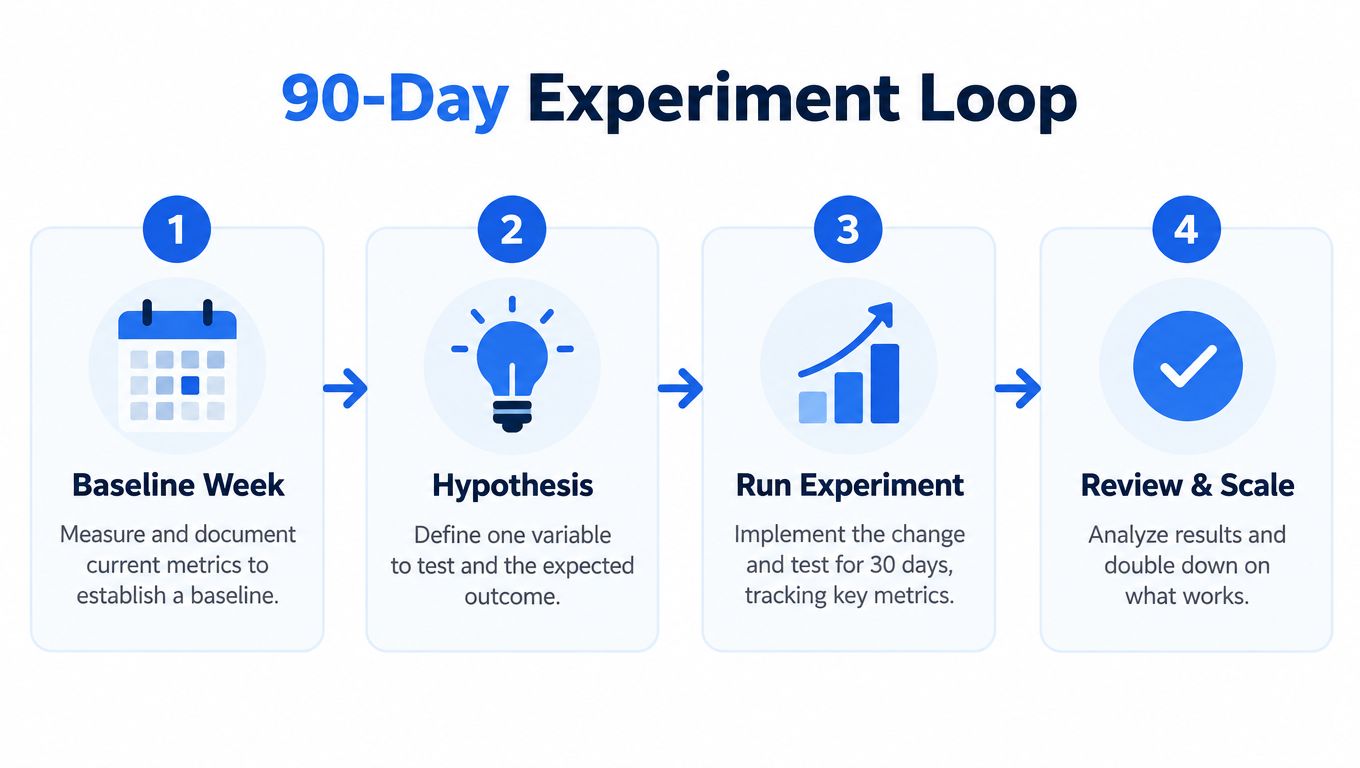
A 90 day loop turns posting into evidence. Start with an Insights audit. Identify when followers are online, which formats produced profile visits, and which topics earned shares rather than passive reactions. Then define a small set of controlled tests across format, topic, posting time, and call to action. Don't redesign everything at once. You won't know what caused the change.
Run small tests with fixed formulas
Each week, publish two or three controlled format variations. Record reach, reactions, comments, shares, profile visits, and follows. Promote only combinations that outperform your Page's own median. Analyze at least 30 posts before drawing engagement rate conclusions, and use a consistent 90 day window for trends. Smaller samples invite confident decisions based on noise.
Calculate follower change as new followers divided by starting followers multiplied by 100. Track it separately from reach and engagement. For public engagement rate, keep one formula throughout the test: reactions plus comments plus shares divided by followers. Compare your result with the 0.15% benchmark noted in the earlier section, but prioritize movement against your own baseline.
- Denominator confusion: Engagement divided by reach usually looks much higher than engagement divided by followers. Never compare them directly.
- Multiple variable changes: A new hook, format, topic, and time in one post produces activity, not learning.
- Reaction chasing: Reactions that don't create profile visits or follows don't prove acquisition value.
- Viral misreading: One reach spike isn't durable growth unless follow conversion and later engagement rise with it.
Your median post is a better teacher than your best post. Scale what repeatedly beats it, not what spiked once.
At day 90, keep the winning series, retire weak pillars, and start the next cycle with one new variable. Predictability comes from repetition of the loop, not intensity in one month.
Your 90-Day Action Plan and Quick Answers
Start this week with measurement, not motivation.
- Week 1: Audit Insights, fix the profile, and record your baseline.
- Weeks 2 to 5: Publish two or three controlled variations weekly using this approach to plan a month of content in advance.
- Weeks 6 to 9: Boost only proven posts, add cross promotion, and repeat winning formats as series.
- Weeks 10 to 13: Review at least 30 posts, compare results with your median, and scale what produced follows.
Quick answers
How often should you post? As often as you can sustain quality and testing. Review frequency with data. More isn't automatically better.
Do ads beat organic? No. Ads amplify proven content and targeting. Organic content proves what deserves amplification.
When do Reels help? When they create non follower reach that converts into profile visits and follows, not views alone.
Can small Pages compete? Yes, when relevance and activation beat a larger competitor's inactive audience. Don't buy followers. You'll pay to weaken the signals you need.
Stop guessing which Facebook posts deserve a follow up, a boost, or a repeat. Social Media Scheduler lets you draft once, tailor content for Facebook and your other channels, schedule it from one calendar, and review reach and engagement so your next 90 day test starts from evidence. Build your first testing calendar today and turn consistent publishing into follower growth you can measure.